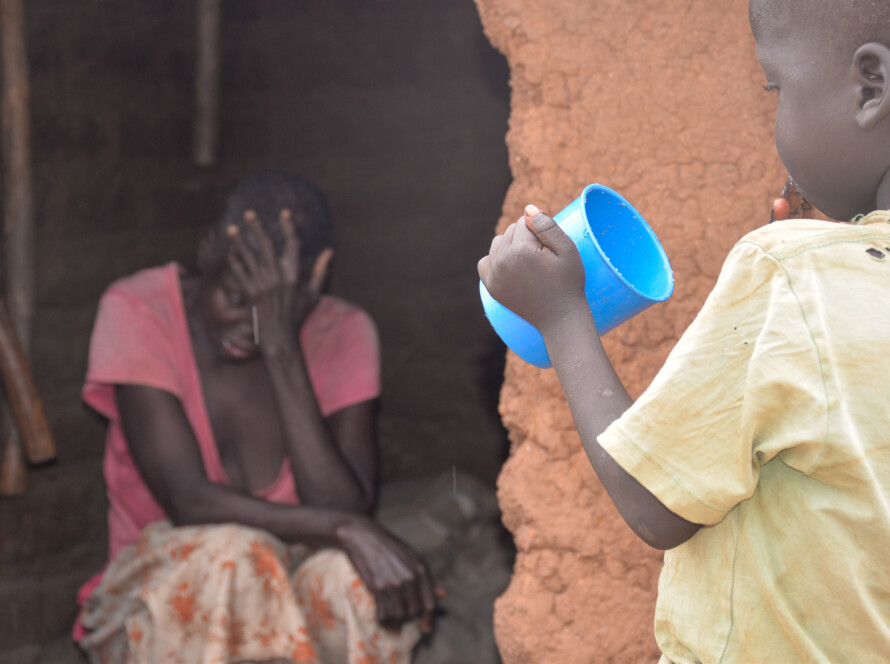
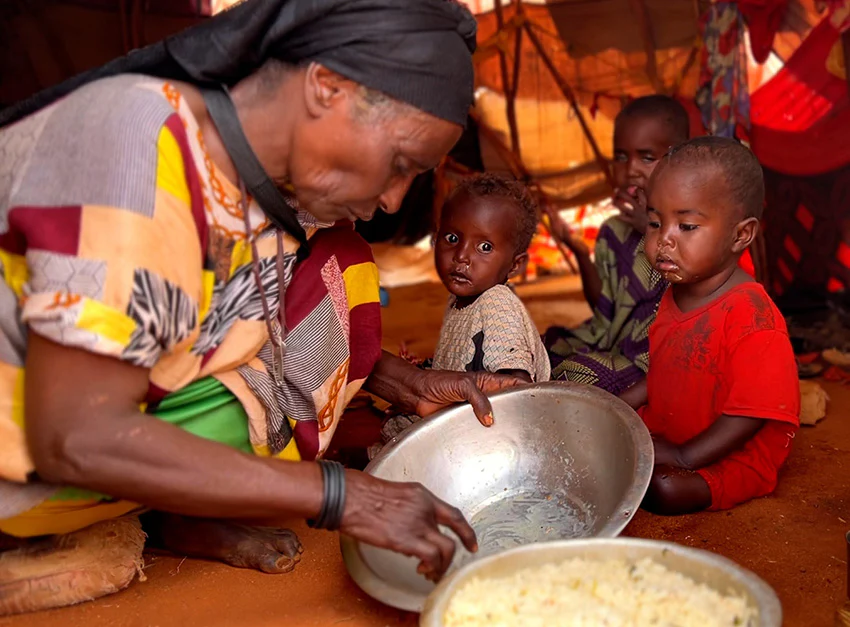
Before last year’s drought, Nurta Hassan Hussein, 25, had 100 cows and 80 goats. But by September of 2021, only three cows and five goats remained. The lack of water and pastureland forced Nurta and her first child to leave their home for a displaced-population camp in nearby Dhobley.
“I was pregnant and sick when we got to Dhobley,” Nurta says. “My body was weak and getting weaker every day. I had lost fat and muscle from hunger, and I felt tired, irritable, and I couldn’t concentrate. I was in bed most of the time, unable to walk or do my daily chores.”
While Nurta was attempting to recover, the crises in the rest of the country multiplied.
Possible famine
Now, in 2022, after four failed rainfall seasons and two desert locust infestations, as well as the economic effects of COVID and the war in Ukraine, food security experts are projecting possible famine.
Nearly eight million people in Somalia now suffer severe food shortages, more than 200 children have died from malnutrition, and hundreds of thousands of people have been, like Nurta, displaced in search of food and water.
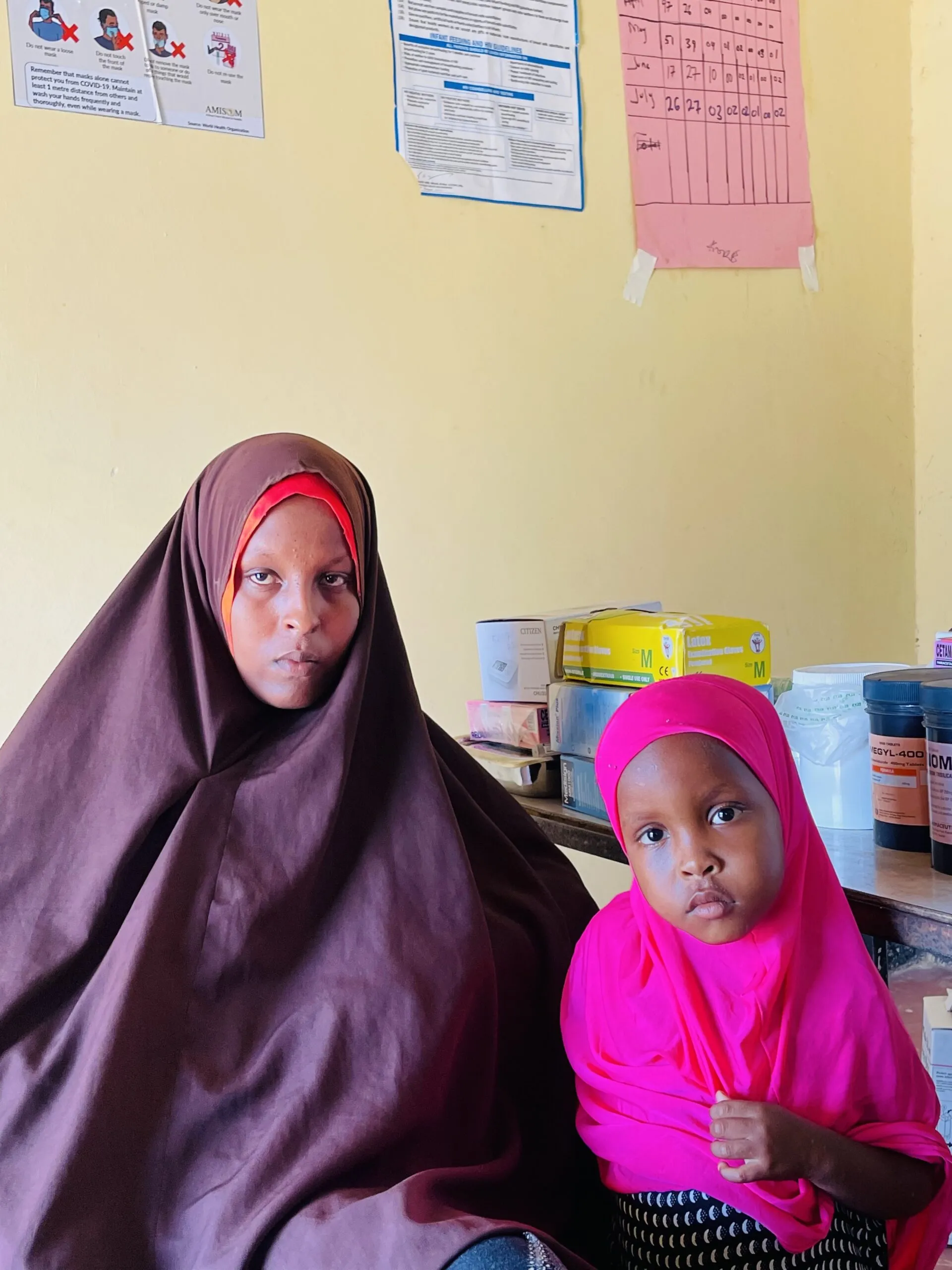
Nurta Hassan Hussein, 25, at the health center in Dhobley with her oldest child.
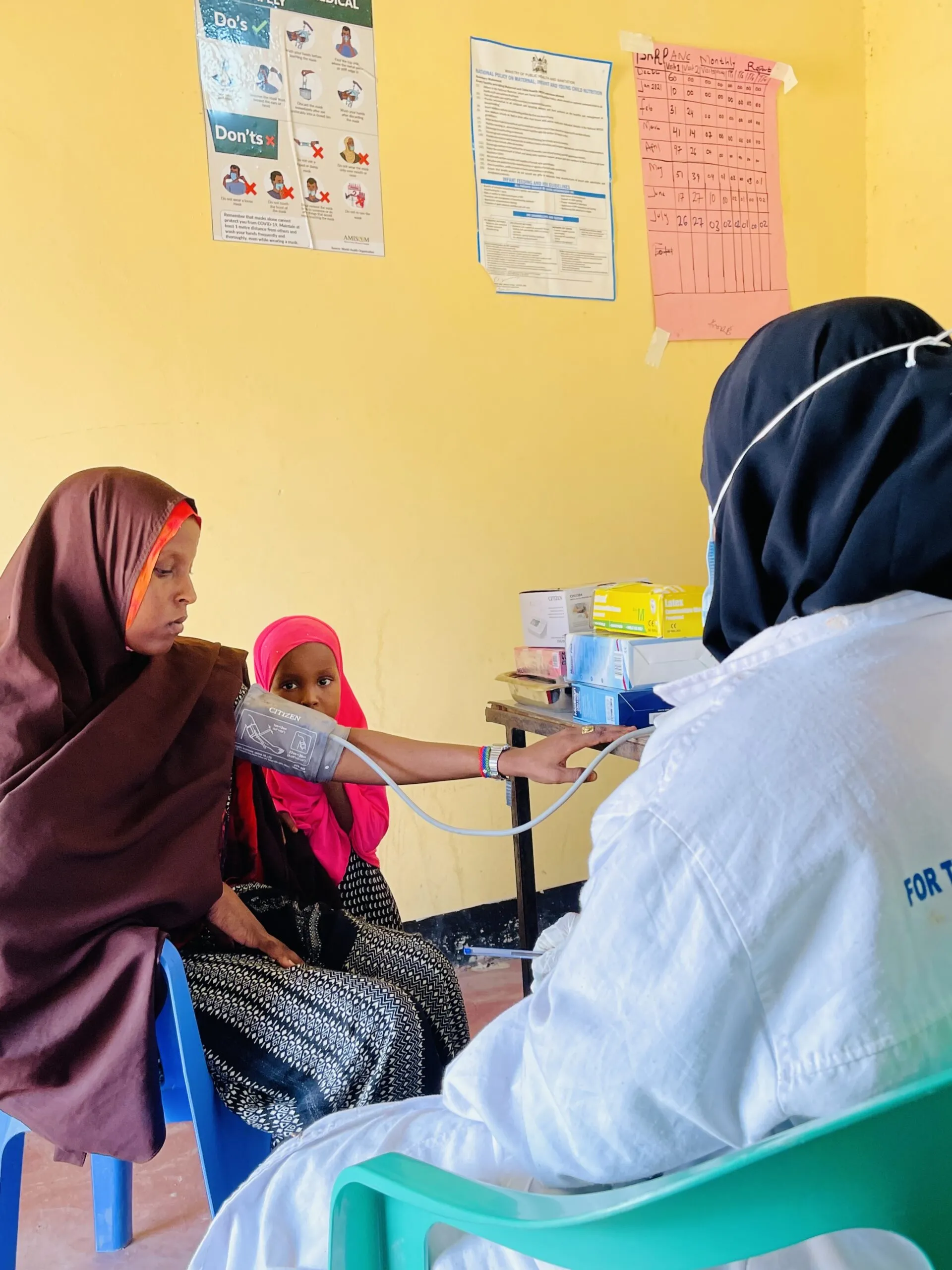
Nurta Hassan Hussein and her daughter at the Dhobley health clinic.
Recovery takes time
“In October, I still wasn’t able to walk,” Nurta says. “So they drove me to the health center to get medical care.”
When she arrived, the nurse told Nurta her hemoglobin level was dangerously low, and her upper arm measured just over seven inches around. According to medical experts, low hemoglobin can lead to heart failure and, in some cases, death, while a mid-upper arm circumference (MUAC) of less than seven and a half inches indicates malnutrition.
The clinic provided Nurta medication to help her hemoglobin, as well as nutrition boosters like plummy nuts to combat her malnutrition.
“After getting care at the center, my health improved,” Nurta says. “The vitamins and irons helped raise my hemoglobin level, and on my last visit my MUAC had gone up to eight and a half inches. In December, I was finally discharged.”
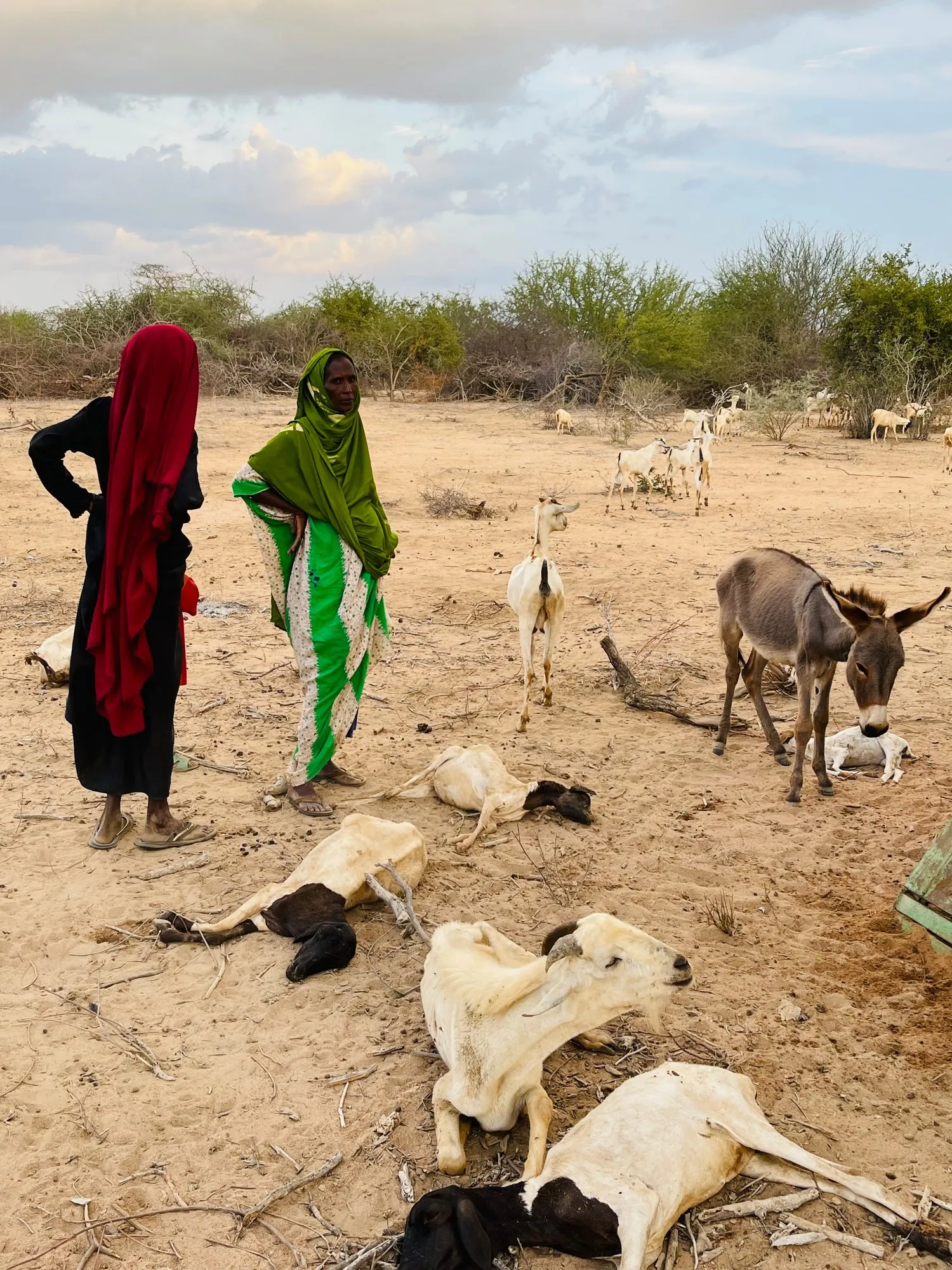
Drought has seen thousands of families being displaced from their homes while more than 700,000 livestock has been lost.
Where the crisis hits hardest
As the multi-layered humanitarian crisis deepens, women like Nurta bear the brunt. As more water sources dry up, women and girls are forced to walk long distances and to wait long hours to get to what remains.
In addition, the costs of water have increased along with fuel prices, which further limits access for many vulnerable households. Livestock rearing, which forms the backbone of families like Nurta’s incomes, has been particularly hard hit. Families have lost hundreds of thousands of animals due to lack of water and pasture.
“For communities in Somalia, another famine is unthinkable,” says Rescueforhunger Somalia/Somaliland Country Director Iman Abdullahi.
“For families who endured the last famine, this is a nightmare repeating itself.”
Rescue For Hunger is scaling up its response to the crisis through health and nutrition programs like the one in Dhobley, as well as assistance with water, sanitation, and hygiene around the country. Rescue For Hunger is also providing food and livelihood support in the form of cash and vouchers, so people can choose how best to prioritize their household finances.
“The humanitarian community put out various warnings and raised alarms over the past two years, yet we failed to avert a catastrophe,” Rescue for Hunger USA vice president for humanitarian affairs, says. “But it is never too late to respond and save lives.”